Four principles of Ahl Al-ḥadīth derived from this Āyah
PRINCIPLE 1: From the explicit meaning (المنطوق), the Āyah establishes that the speech of a Fāsiq is to be verified and not accepted, and the result of this verification is suspension; because as long as you are verifying and investigating it, you are not acting upon it. This is the intended meaning of verification here.
PRINCIPLE 2: From the implicit meaning (المفهوم المخالفة), the Āyah establishes another…
▪️ “Loosen your hand with charity, and the ropes of calamity will be loosened from your neck. Know that your need for the reward of charity is greater than the need of the one receiving it.”
▪️ “If your heart thirsts, quench it only with the Qur'ān; if it feels lonely, comfort it only with the remembrance of the Most Merciful.”
▪️ “Do not say, ‘I succeeded,’ but say, ‘Allāh granted me success.’ Do not say, ‘I was right,’ but say, ‘Allāh guided me.’ Do not say, ‘I earned,’ but say, ‘Allāh provided for me.’”
▪️ “Whoever constantly glorifies Allāh, his face becomes radiant; whoever constantly praises…
#LIFE_LESSONS
It May Sound Appealing, but Verifying Before Sharing Is Always Best Practice
We may see students, and even well-known scholars, post statements attributing them to Ibn Al-Qayyim or Ibn Taymiyyah (may Allāh have mercy on them) without referencing their sources. Upon reflection and research, these sayings are neither theirs nor found in any of their writings. In fact, those who are familiar with their…
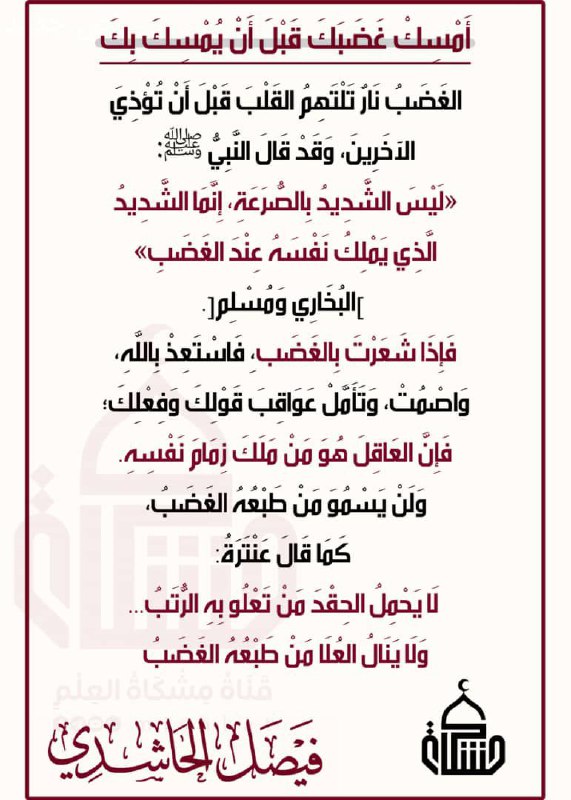
Restrain your anger before it restrains you
The Prophet ﷺ said:
((لَيْسَ الشَّدِيدُ بِالصُّرَعَةِ، إِنَّمَا الشَّدِيدُ الَّذِي يَمْلِكُ نَفْسَهُ عِنْدَ الغَضَبِ))
“The strong is not the one who overcomes others in wrestling; rather, the strong is the one who controls himself when angry.” [Al-Bukhārī and Muslim]
So, when you feel anger rising, seek refuge in Allāh, remain silent, and reflect upon the consequences…
Principles in Reading & Writing Arabic [Preschool Level]
Lesson 15 ⤵️
https://youtu.be/Yx4kzSCC8mU
This book is designed to help young learners master the Arabic alphabet in both reading and writing. Gaining proficiency in these letters marks the beginning of their journey in learning the Arabic language and serves as a solid foundation for further study.
Upon successfully completing and mastering the content of this book, students will move on to the Level 1 materials…
Beware of Takhbeeb (Inciting Discord)
It was narrated by Abu Hurairah (may Allāh be pleased with him), that the Messenger of Allāh ﷺ said:
((ليس منا من خَبَّبَ امرأةً على زوجِها، أو عبدًا على سيِّدِه))
"He is not one of us who corrupts a woman against her husband, or a servant against his master." [Abu Dawood (2175); authenticated by Sheikh Albani in Ṣaḥīḥ Sunan Abī Dāwūd]
Takhbīb refers to the act of inciting…
#LIFE_LESSONS
From the Blessing of knowledge
Know that it is not necessarily required, when quoting from the works of others, to obtain their permission; however, you must at least attribute the quotation to its rightful author.
Al-Qurṭubi said in the introduction to his Tafsīr:
«من بركة العلم أن يضاف القول إلى قائله»
“From the blessing of knowledge is attributing a statement to the one who said it.”
If someone…
#LIFE_LESSONS
Overlooking Minor Faults
It is narrated in Sahih Muslim (1469) from Abu Hurayrah (may Allāh be pleased with him), who said: The Messenger of Allāh ﷺ said:
((لَا يَفْرَكْ مُؤْمِنٌ مُؤْمِنَةً إِنْ كَرِهَ مِنْهَا خُلُقًا رَضِيَ مِنْهَا آخَرَ)).
"A believing man should not hate a believing woman; if he dislikes one of her traits, he will be pleased with another."
Explanation: This ḥadīth points to the…
#LIFE_LESSONS
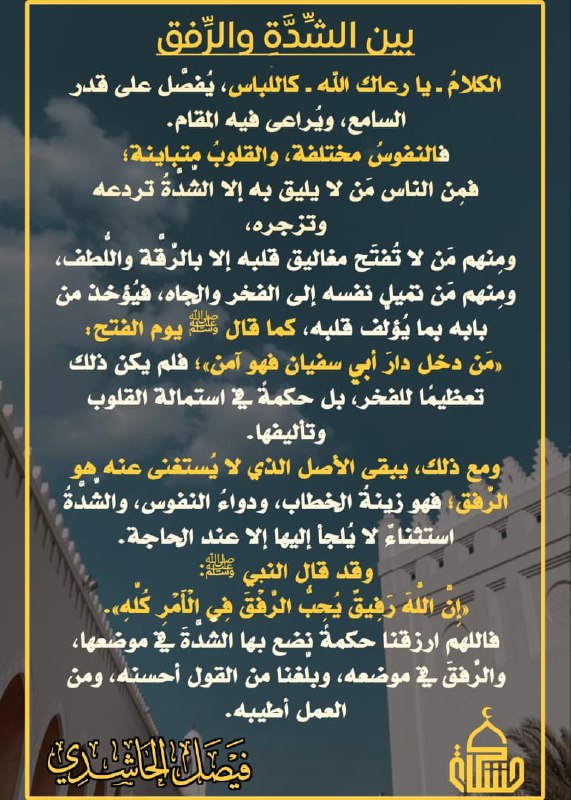
Between Sternness and Gentleness
Speech is like clothing: it should be tailored to fit the listener and chosen in accordance with the situation.
For souls differ and hearts vary;
Among people are those for whom only sternness is fitting—restraining them and holding them back; And among them are those whose hearts can only be opened through tenderness and kindness; And among them are those inclined…
#LIFE_LESSONS
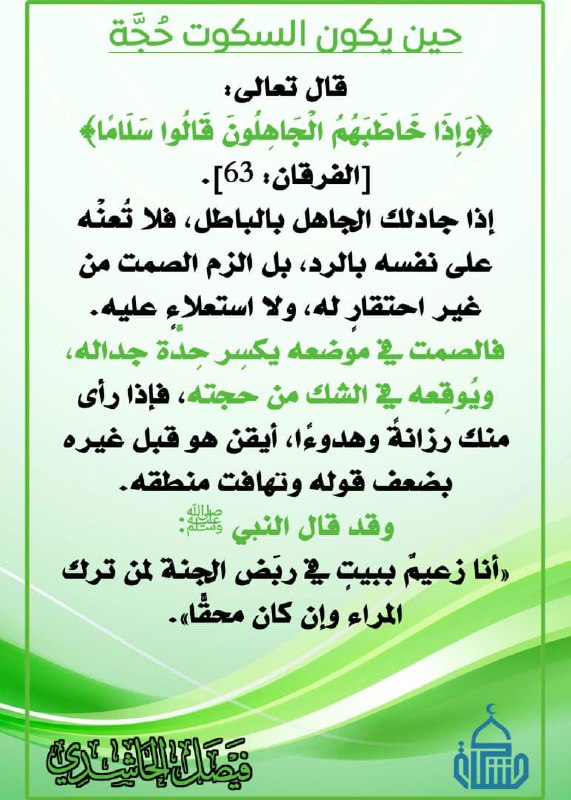
When Silence Speaks Louder Than Words
Allāh, the Exalted, says:
﴿وَإِذَا خَاطَبَهُمُ الْجَاهِلُونَ قَالُوا سَلَامًا﴾
"And when the ignorant address them [harshly], they say [words of] peace." [Al-Furqān: 63]
If an ignorant person disputes with you using falsehood, do not aid him against himself by responding; rather, maintain your silence—without contempt for him nor arrogance over him.
For silence,…
Principles in Reading & Writing Arabic [Preschool Level]
Lesson 14 ⤵️
https://youtu.be/36yckiS7Ky0
This book is designed to help young learners master the Arabic alphabet in both reading and writing. Gaining proficiency in these letters marks the beginning of their journey in learning the Arabic language and serves as a solid foundation for further study.
Upon successfully completing and mastering the content of this book, students will move on to the Level 1 materials…
Lesson 14 ⤵️
https://youtu.be/sWCWfiRXKsM
Class Summary:
The student reviews the questions from Unit 3. They are also taught why Islam is the greatest blessing.
#LIFE_LESSONS
Chastity and Self-Restraint
It is reported in Ṣaḥīḥ Al-Bukhārī and Ṣaḥīḥ Muslim:
“Whoever seeks to be chaste, Allāh will grant him chastity; and whoever seeks to be self-sufficient, Allāh will enrich him.”
The one who seeks chastity (Al-mustaʿfif) is he who refrains from asking people with his tongue, and the one who is self-sufficient (Al-mustaghni) is he who does not covet what others possess in…
#LIFE_LESSONS
Addressing Others by Their Most Beloved Names
It is reported in Ṣaḥīḥ Al-Bukhārī and Ṣaḥīḥ Muslim on the authority of Anas (may Allāh be pleased with him) who said:
“The Prophet ﷺ was the best of people in character. I had a younger brother who was nicknamed Abū ʿUmayr. Whenever the Prophet ﷺ would come, he would say, ‘O Abū ʿUmayr, what has the little bird done?’”
This narration demonstrates that…
#LIFE_LESSONS
Stubbornness
Stubbornness is rigidity in one's view.
It is divided into two types:
1. Praiseworthy stubbornness
2. Blameworthy stubbornness
The praiseworthy form is steadfast adherence to the truth once it has become as clear as the sun at midday, without wavering in the slightest, while maintaining gentleness and embodying calmness and dignity. An example of this is Abū Bakr’s insistence on…
Principles in Reading & Writing Arabic [Preschool Level]
Lesson 13 ⤵️
https://youtu.be/rPGzcAGZFw8
This book is designed to help young learners master the Arabic alphabet in both reading and writing. Gaining proficiency in these letters marks the beginning of their journey in learning the Arabic language and serves as a solid foundation for further study.
Upon successfully completing and mastering the content of this book, students will move on to the Level 1 materials…
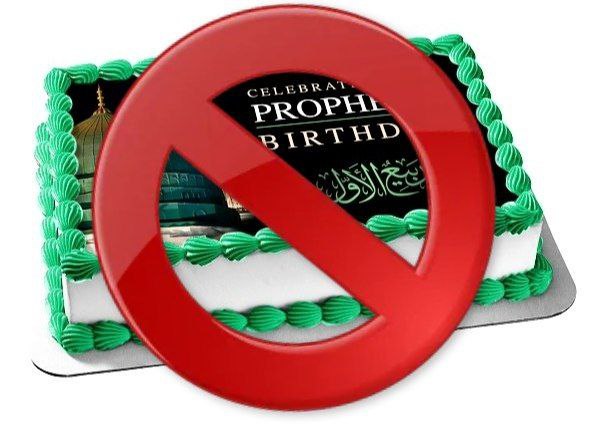
We don't celebrate the Prophet's birthday ﷺ because:
● There's not a single Āyah in the Qurʿān endorsing this celebration.
● There's not a single ḥadīth from the Messenger of Allāh ﷺ endorsing this celebration, whether authentic or inauthentic.
● There's not a single Athar from any of the Companions regarding this celebration, whether authentic or inauthentic.
● The Messenger of Allāh ﷺ did not celebrate it during his lifetime, nor did any of his Companions or…
Lesson 13 ⤵️
https://youtu.be/6--eb6MWVN4
Class Summary:
The student learns that Allāh is the One Who bestows upon us all blessings.
س. من الذي أنعم علينا بجميع النعم؟
Q. Who has bestowed upon us all the blessings?
ج. الله الذي أنعم علينا بجميع النعم. قال الله تعالى: {وَمَا بِكُم مِّن نِّعۡمَةࣲ فَمِنَ ٱلله}. ونعمه كثيرة. قال الله تعالى: {وإن تعدوا نعمة الله لا تحصوها}.
A. Allāh is the One who bestowed upon us…
Unnecessary Enquiries
Some people, when you sit with them, behave as though they are interrogating you: “Where do you work? How much is your salary? Where do you live? Is your house rented or owned? How much did you buy it for? How much is the rent? How many children do you have?”
People become irritated by this and dislike being asked such questions. Most of us neither approve of nor appreciate these types of…
Transform your everyday activities into acts of worship by setting a sincere intention! #Quran_clips
Muʿādh said to Abū Mūsā: “How do you recite the Qur’ān?” He replied: “Standing, sitting, and while riding my mount, and I recite it intermittently, bit by bit.” Muʿādh said:
«أمَّا أنَا فأنَامُ وأَقُومُ، فأحْتَسِبُ نَوْمَتي كما أحْتَسِبُ قَوْمَتِي»
“As for me, I sleep and I rise (for prayer), and I seek reward for my sleep just as I seek reward for my rising.” [Bukhari 4344]